

Introduction
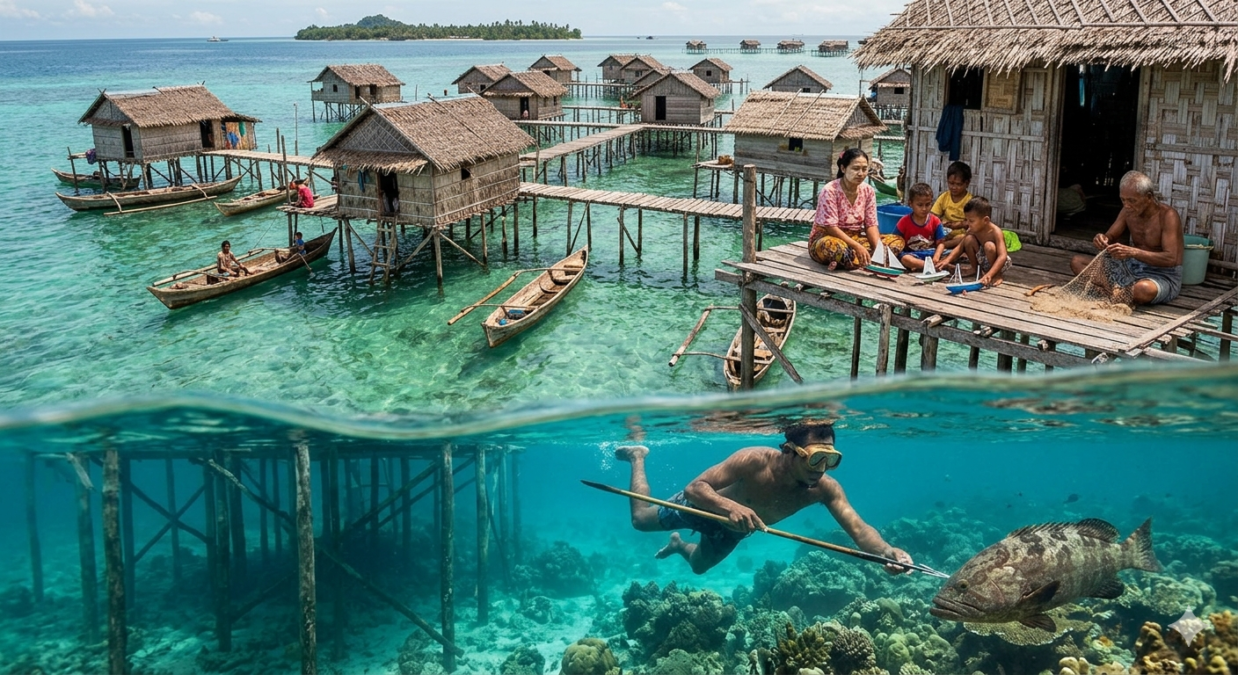
The Bajau people are among the most fascinating indigenous communities in the world. Often referred to as “Sea Nomads” or “Sea Gypsies,” they have developed a unique way of life that revolves around the ocean. For centuries, the Bajau have lived in harmony with the sea, spending much of their lives on boats and relying on marine resources for survival. Their culture, traditions, and remarkable adaptations to life at sea have attracted the attention of anthropologists, historians, and scientists alike.
Primarily found across the coastal regions of Malaysia, Indonesia, and the Philippines, the Bajau people represent a diverse ethnic group with deep historical roots. Despite living in different countries, many Bajau communities share common traditions, beliefs, and cultural practices that distinguish them from neighboring populations. Their close relationship with the ocean has shaped every aspect of their lives, from their economy and social structure to their spirituality and identity.
In modern times, the Bajau face numerous challenges, including environmental changes, economic pressures, and the effects of modernization. However, their resilience and strong cultural heritage continue to inspire people around the world. Understanding the Bajau people provides valuable insights into human adaptability, cultural diversity, and the enduring connection between people and nature.
The Origins and History of the Bajau People
The history of the Bajau people stretches back hundreds of years, although their exact origins remain a subject of debate among scholars. Various theories suggest that their ancestors migrated through the islands of Southeast Asia, gradually developing a maritime lifestyle that became central to their identity. Oral traditions among the Bajau often tell stories of ancient migrations and voyages across vast stretches of ocean.
Historical records indicate that Bajau communities were active participants in regional trade networks long before colonial powers arrived in Southeast Asia. Their exceptional seafaring skills allowed them to travel between islands, transport goods, and establish connections with different ethnic groups. As skilled navigators, they played an important role in the economic and cultural exchange that shaped the region.
Over time, Bajau populations spread across a wide geographical area. Different communities adapted to local environments while maintaining core cultural characteristics. This historical mobility contributed to the diversity found among Bajau groups today. Although some communities eventually settled on land, many retained strong maritime traditions that continue to define their way of life.
Life on the Sea
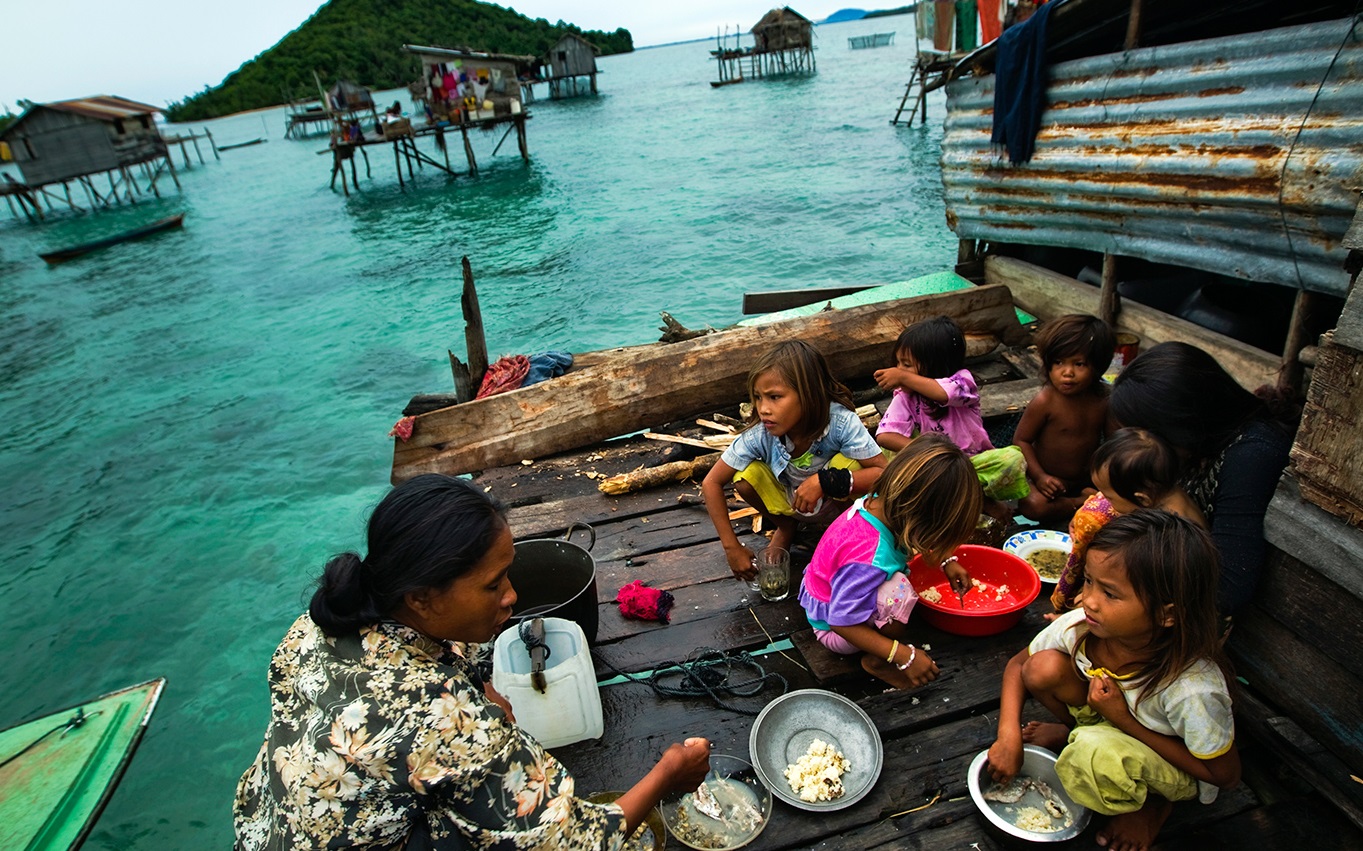
Perhaps the most remarkable aspect of Bajau People culture is their traditional lifestyle on the water. Historically, many Bajau families lived on wooden boats known as lepa-lepa. These vessels served not only as transportation but also as homes where entire families would eat, sleep, and raise children. Living on the sea allowed them to remain close to fishing grounds and maintain their independence.
Daily life on the water required extensive knowledge of marine environments. Bajau fishermen learned from a young age how to read weather patterns, navigate coastal waters, and locate fish. Their understanding of tides, currents, and seasonal changes was developed through generations of experience. This knowledge became essential for survival and economic success.
Although many Bajau people now live in coastal villages built on stilts, the sea remains central to their identity. Fishing, boat building, and marine gathering continue to play significant roles in community life. Even those who have transitioned to more permanent settlements often maintain strong emotional and cultural ties to the ocean.
Extraordinary Diving Abilities
One of the most famous characteristics of the Bajau people is their incredible diving ability. For generations, Bajau fishermen have practiced free diving to gather fish, sea cucumbers, shellfish, and other marine resources. Unlike scuba divers, they traditionally dive without modern breathing equipment, relying solely on breath-holding techniques.
Researchers have been fascinated by the physical adaptations observed among Bajau divers. Scientific studies have revealed that many Bajau individuals possess larger spleens compared to neighboring populations. The spleen plays an important role in storing oxygen-rich red blood cells, and a larger spleen may help divers remain underwater for longer periods. This adaptation is considered one of the most remarkable examples of human evolution in response to environmental demands.
Beyond biological adaptations, the Bajau’s diving skills are also the result of extensive training and experience. Children often begin swimming and diving at a very young age, gradually developing exceptional underwater abilities. Their comfort beneath the surface allows them to navigate coral reefs and hunt marine species with impressive efficiency.
Culture and Traditions
Bajau culture is rich with traditions that reflect their maritime heritage. Family and community relationships play a central role in daily life. Elders are respected for their wisdom and experience, while younger generations learn important skills and values through observation and participation in community activities.
Music and dance hold a special place in Bajau cultural expression. Traditional performances often accompany celebrations, weddings, and festivals. Musical instruments and songs help preserve stories, historical memories, and cultural identity. These artistic traditions continue to connect communities despite changing social and economic conditions.
Storytelling is another important aspect of Bajau culture. Oral traditions have long served as a means of preserving history, beliefs, and knowledge. Through stories passed from one generation to the next, community members maintain a sense of continuity and belonging. These narratives often highlight themes of courage, survival, and respect for nature.
Religion and Spiritual Beliefs
The majority of Bajau people today practice Islam, which has significantly influenced their social customs, values, and daily routines. Islamic teachings guide important aspects of community life, including marriage, education, and religious celebrations. Mosques often serve as important centers for worship and community gatherings.
Despite the widespread influence of Islam, some traditional beliefs and practices continue to coexist alongside formal religious observance. Historically, Bajau communities held spiritual beliefs connected to the sea, ancestors, and natural forces. Certain rituals were performed to seek protection during voyages or to ensure successful fishing expeditions.
The blending of religious and cultural traditions has created a unique spiritual landscape within many Bajau communities. This combination reflects the broader history of cultural interaction and adaptation that characterizes much of Southeast Asia. It also demonstrates how communities can preserve elements of their heritage while embracing new religious influences.
Traditional Economy and Livelihood
Fishing has long been the foundation of the Bajau economy. Generations of fishermen have relied on the sea to provide food and income for their families. Different fishing methods are used depending on local conditions, target species, and available technology. The knowledge required for successful fishing is often passed down through family lines.
In addition to fishing, many Bajau communities engage in activities such as seaweed farming, shell collection, and small-scale trading. These occupations help diversify household incomes and reduce dependence on a single source of livelihood. In some regions, tourism has also created new economic opportunities for local residents.
Economic modernization has brought both benefits and challenges. Improved access to markets, education, and infrastructure can enhance living standards. However, competition from industrial fishing operations and environmental degradation may threaten traditional livelihoods. As a result, many Bajau families must balance cultural preservation with economic adaptation.
Housing and Community Structure
Traditional Bajau settlements vary depending on geography and local customs. Some families historically lived entirely on boats, while others established villages along coastlines. In many areas, homes are constructed on wooden stilts above shallow waters, creating distinctive waterfront communities.
These stilt villages are often designed to accommodate the practical needs of a maritime lifestyle. Wooden walkways connect houses, allowing residents to move easily between homes and boats. The close arrangement of structures encourages strong social interaction and cooperation among community members.
Community life is typically characterized by mutual support and shared responsibilities. Families often work together during fishing activities, celebrations, and construction projects. This cooperative spirit helps strengthen social bonds and contributes to the resilience of Bajau communities in the face of external challenges.
Language and Identity
The Bajau people speak a variety of languages and dialects that belong to the larger Austronesian language family. These languages reflect the group’s historical migrations and interactions with neighboring populations. While some dialects remain widely spoken, others face pressure from dominant national languages.
Language serves as an important marker of cultural identity. Through language, communities preserve traditional knowledge, stories, songs, and social values. Maintaining linguistic diversity is therefore closely connected to preserving broader aspects of Bajau cultural heritage.
In many regions, younger generations are becoming increasingly multilingual, speaking both their native Bajau language and national languages such as Malay, Indonesian, or Filipino. This linguistic flexibility can create new opportunities while also raising concerns about the long-term survival of traditional dialects.
Challenges Facing the Bajau Today
Like many indigenous communities around the world, the Bajau people face a range of modern challenges. Environmental changes, including coral reef degradation, pollution, and overfishing, threaten the marine ecosystems upon which many families depend. These pressures can reduce fish populations and make traditional livelihoods more difficult.
Legal and political issues also affect some Bajau communities. In certain areas, questions of citizenship, land rights, and access to public services create significant obstacles. Without proper legal recognition, some families may struggle to obtain education, healthcare, and employment opportunities.
Modernization presents another complex challenge. While access to technology and infrastructure can improve quality of life, rapid social change may also contribute to the loss of traditional knowledge and cultural practices. Balancing development with cultural preservation remains an important concern for many Bajau leaders and organizations.
Scientific Interest in the Bajau People
The Bajau have become a subject of international scientific interest because of their remarkable adaptations to life at sea. Researchers studying human biology have explored how generations of diving may have influenced physical characteristics within Bajau populations. These studies offer valuable insights into human evolution and adaptation.
Anthropologists are equally interested in the Bajau because of their unique cultural practices and maritime lifestyle. Their ability to maintain strong cultural traditions despite centuries of change provides an important example of resilience and cultural continuity. Field research has documented many aspects of Bajau life, helping to preserve knowledge that might otherwise be lost.
Environmental scientists also recognize the value of Bajau ecological knowledge. Their deep understanding of marine ecosystems can contribute to conservation efforts and sustainable resource management. By combining traditional knowledge with modern science, researchers hope to develop more effective approaches to protecting coastal environments.
The Future of the Bajau People
The future of the Bajau people will depend on their ability to navigate a rapidly changing world while preserving the cultural values that define their identity. Education, economic opportunities, and legal recognition will play important roles in supporting community development and improving living conditions.
Cultural preservation efforts are becoming increasingly important as younger generations encounter new influences and opportunities. Community organizations, educators, and cultural leaders are working to document languages, traditions, and historical knowledge to ensure that these valuable aspects of Bajau heritage are not lost.
At the same time, many Bajau communities continue to demonstrate remarkable adaptability. Their history is one of movement, resilience, and innovation. By building on this legacy, they can continue to thrive while maintaining a meaningful connection to the sea that has shaped their identity for centuries.
Conclusion
The Bajau people are one of the world’s most extraordinary maritime communities. Their history, culture, and unique relationship with the ocean offer a compelling example of human adaptability and resilience. From their traditional life aboard boats to their exceptional diving abilities, the Bajau have developed a way of life unlike any other.
Despite facing numerous challenges in the modern era, they continue to preserve important aspects of their cultural heritage while adapting to changing circumstances. Their traditions, knowledge, and connection to the marine environment remain valuable not only to their own communities but also to researchers and conservationists around the world.
As interest in indigenous cultures and environmental sustainability continues to grow, the story of the Bajau people serves as a powerful reminder of humanity’s diverse ways of living and interacting with nature. Their legacy as the sea nomads of Southeast Asia remains both inspiring and deeply significant in today’s interconnected world.